
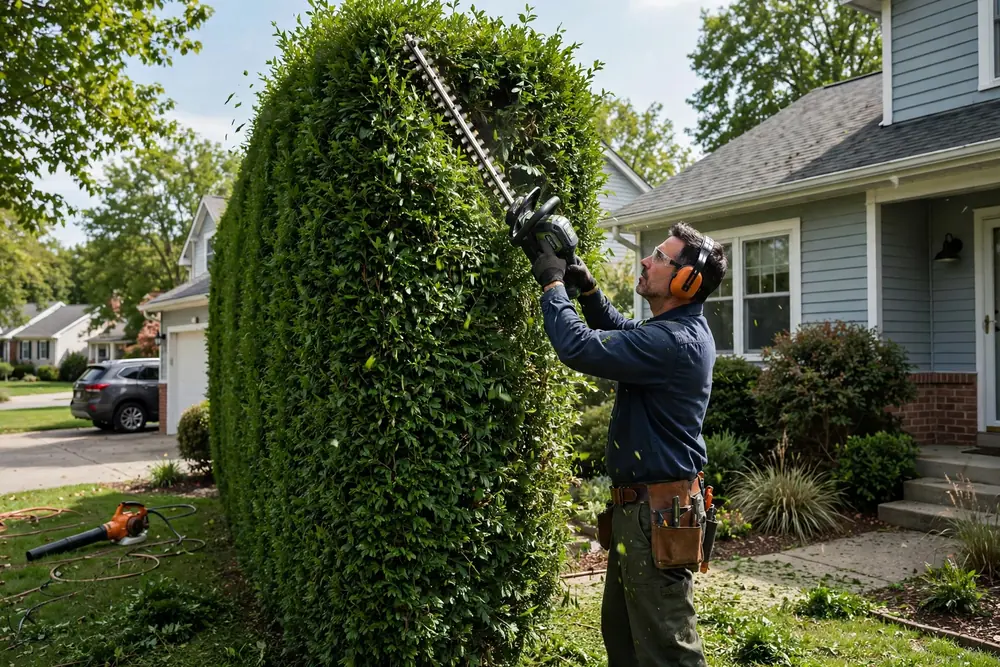
Maryland summers make hedges explode. The boxwoods by the front door double in size. The privet hedge swallows the sidewalk. The holly scratches everyone who walks past. Left alone for a season or two, shrubs go from neat to wild — blocking windows, crowding walkways, and dragging down your curb appeal. We trim them back into clean, even shapes. And it is not just looks: cutting out old growth lets light and air in, so your shrubs grow back thicker and healthier. Call or text (240) 213-4913 for a free on-site estimate.
What Is Shrub & Hedge Trimming?
Shrub and hedge trimming is the shaping and sizing of the bushes around your home. The foundation plantings. The privacy hedge along the property line. The ornamental shrubs in the beds. We cut back overgrowth, even up the lines, and restore the shape — round, square, or natural, your choice.
This is different from tree trimming, and the line is simple: tree trimming is for trees with big limbs; shrub and hedge trimming is for the bushes and hedges around your home. Trees need saws, ropes, and climbing gear. Shrubs need shears, sharp eyes, and a sense of shape. Different tools, different skills, different page. If you have both overgrown trees and wild hedges, tell us during the visit — we handle both, and bundling them in one trip saves you money.
We work with all the shrubs Maryland yards grow: boxwood, holly, azalea, privet, laurel, nandina, and burning bush. Each one has its own timing and its own limits. A crew that knows the difference will not shear your azaleas the week before they bloom.
When You Need It
- Hedges block your windows or hang over the sidewalk.
- Bushes crowd your front door, walkway, or driveway.
- The shrubs look wild and hurt your home's curb appeal.
- Old, woody growth needs cutting back to refresh the plant.
- A hedge has grown so tall you cannot see over it anymore.
- Thorny holly or barberry scratches everyone who passes.
- You are selling the house and the front yard needs to look sharp.
How It Works
- Free on-site visit. We walk your plantings with you. You point out what bothers you. We point out what we see — the shrubs that need a light touch-up and the ones that need a hard cutback.
- You get a written price. One price for the whole job: trimming, shaping, and hauling every clipping away. If some shrubs need a different season for their trim (flowering shrubs, for example), we will tell you and schedule accordingly.
- We shape with the right technique. Formal hedges — privet, boxwood rows — get sheared into crisp lines. Flowering and ornamental shrubs get hand-pruned: selective cuts that keep their natural shape and protect next season's blooms. One rule guides every cut: the top stays narrower than the bottom. A hedge wider at the top shades its own base, and the bottom goes bare and brown. Tapered sides let light reach all the way down.
- We cut back the old wood where it helps. Overgrown shrubs often need rejuvenation: cutting the oldest, woodiest stems down low so young growth takes over. Most established shrubs — privet, laurel, burning bush — bounce back fuller than ever. We will tell you which of yours can take a hard cut and which need a gentler approach over two seasons.
- We haul every clipping away. Hedges make an astonishing amount of debris. We rake the beds, blow off the walkways, and load it all. Your yard looks sharp the same day — no piles waiting for the trash truck.
What Affects the Cost?
Four things drive the price of shrub and hedge trimming.
How many shrubs. Three boxwoods by the door are a quick visit. A full property with hedges on three sides and beds full of ornamentals is a half-day job. We price the whole property, not per snip.
How overgrown they are. A yearly maintenance trim is fast — we are just taking off the new growth. Shrubs that have not been touched in three years need real reshaping: cutting back hard, opening up the centers, hauling twice the debris. Neglected costs more than maintained.
Height and ladder work. Waist-high hedges are quick. Ten-foot privet that needs ladder work and overhead cutting takes longer and needs more crew. Tall hedges also drop more debris to clean up.
What kind of cleanup is involved. Some yards just need the clippings hauled. Others need beds edged, debris blown out of groundcover, and walkways washed down. Ask that the full cleanup is spelled out in the written price — the yard should look finished when the crew leaves, not just trimmed.
Call (240) 213-4913 for a free on-site written estimate. Most hedge jobs are priced on the spot.
Why Not Do It Yourself?
Honest answer: small hedge touch-ups are fine DIY work. A sharp pair of shears, a Saturday morning, and a waist-high boxwood — go for it. But there are three ways homeowners commonly wreck their shrubs.
First, the timing trap. Flowering shrubs bloom on old wood or new wood, and the difference decides everything. Azaleas, forsythia, and lilac bloom on old wood — trim them in fall and you just cut off every flower for next spring. Trim them right after they bloom instead. Most homeowners learn this the expensive way, staring at a flowerless spring.
Second, the bare-wood mistake. Boxwood and many evergreens do not regrow from old bare stems. Shear into the brown center and that spot stays brown forever. A pro knows how far back each species can go. Privet forgives almost anything. Boxwood forgives almost nothing.
Third, the ladder and the volume. Tall hedges mean ladder work with a running trimmer — awkward and tiring. And a full day of hedge trimming produces a mountain of clippings that somehow has to leave your property. By the time you rent the trimmer, buy the bags, and make the dump runs, the "savings" are thin.
A few neat shrubs? DIY. A whole property of overgrown hedges, tall privet, or shrubs you are not sure about? Call (240) 213-4913 and we will handle it in a day.
Common Shrub & Hedge Trimming Mistakes
Mistake 1: Trimming flowering shrubs at the wrong time. Azaleas, rhododendron, forsythia, and lilac set next year's buds on this year's growth. Cut them in fall or winter and spring brings bare branches. The rule: trim spring bloomers right after they finish flowering. Summer bloomers get trimmed in late winter. When in doubt, ask before you cut.
Mistake 2: Shearing the same flat top every year. Year after year of flat-top shearing builds a thick shell of leaves on the outside and a dead brown interior. The hedge looks fine until a heavy snow splits it open and reveals the hollow middle. Hand-prune some cuts into the interior each year to keep light and air inside the plant.
Mistake 3: Cutting back into old bare wood. That overgrown boxwood tempts you to take off two feet at once. But boxwood, holly, and most evergreens will not sprout from old wood with no leaves. The cut stays bare permanently. Reduce overgrown evergreens gradually — a few inches a year — or replace the plant. Deciduous shrubs like privet and burning bush are the forgiving ones; they take hard cutbacks happily.
Mistake 4: Leaving the clippings in the beds. It is tempting to let the small stuff rot where it falls. But piles of fresh clippings mat down, trap moisture, and breed fungal disease — especially on azaleas and boxwood. Rake the beds clean after every trim. We haul everything away as part of the job.
Our Service Area
Waldorf Tree Services Experts trims shrubs and hedges across Waldorf, MD and all of Charles County, including La Plata, White Plains, and Bryans Road. From foundation boxwoods to full privacy hedges, one visit gets them all shaped up. See our tree service in La Plata and tree service in White Plains pages.
Get a Free Estimate
Ready when you are. Call or text (240) 213-4913 — or send our short form and we will call you back. One call. Free visit. Written price. No pressure.
[Call (240) 213-4913 — tap to call: tel:+12402134913]
Free estimate form: Name | Phone | Service needed
Waldorf Tree Services Experts — we serve Waldorf, MD and all of Charles County.